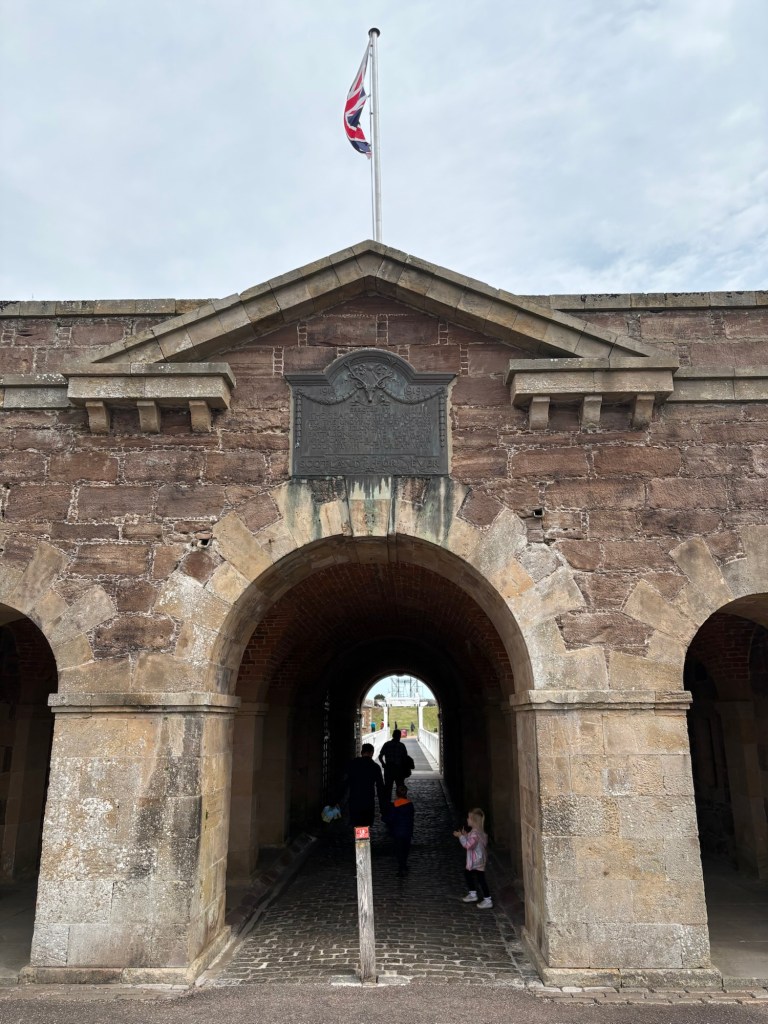
In the latest episode of the Clan Mackenzie Podcast, we’re joined by Gavin Wilkie of the Highlanders’ Museum at Fort George, Inverness, for an in-depth exploration of the proud history of the Seaforth Highlanders.
Our conversation traces the regiment’s origins and early development, its deep-rooted connections to Clan Mackenzie, and its service through major conflicts, from the 18th century through the First and Second World Wars. Gavin also shares insights into the remarkable artifacts, personal stories, and immersive exhibits visitors can experience today at the Highlanders’ Museum.
This episode is essential listening for anyone interested in Scottish military history, Highland regiments, or the enduring Mackenzie legacy.
For years, countless articles have repeated the claim that a certified Seaforth tartan sample from 1816 existed, but no one ever seemed able to show it.
That changes today.
The Clan Mackenzie Initiative has located and published what appears to be the first publicly accessible images of the 1816 Seaforth tartan, directly linked to the Highland Society of London and signed in the name of M E F [Mary Elizabeth Frederica] Mackenzie of Seaforth.
A century old reference has now became a visible reality and adds a whole new chapter to Mackenzie history.
Our latest episode is now live, and it’s a special one. We sat down with James Ansite, founder of Sport Kilt, a company that has been shaping modern Highland style for nearly 30 years. Since its launch in the mid-1990s, Sport Kilt has grown from a garage project in Southern California into one of the most recognizable kilt brands in the world.
James shares how Sport Kilt began with a single handmade kilt, why he wanted a lighter and more accessible alternative to the traditional wool kilt and how the company helped bring tartan culture into everyday life, from Highland Games athletes to families discovering their Scottish roots.
We also explore the blend of heritage and innovation that defines both Sport Kilt and the work we do here at the Clan Mackenzie Initiative. It’s a conversation about creativity, tradition (and a wee bit of rebellion) and the ways modern makers keep Scottish culture alive.
As a thank you to our listeners, Sport Kilt is offering 10% off your next order.
Use promo code ClanMac at SportKilt.com.
This was a fun discussion and we’re excited to share it with the global Mackenzie community and all who love Scottish culture.
Two new features take us deep into the foundations of Mackenzie history:
The Raven’s Skull – exploring the legendary origins of the clan, the mysteries of Eilean Donan, and the tale of a skull said to give the speech of birds.
The Crusader and the Slave – tracing Kenneth Macmathan’s possible crusade with Louis IX, from Scottish shipyards to crusader castles and the markets of the East.
Discover both stories below and see how history, myth, and memory intertwine.
Castle Leod is a historic seat of the Mackenzies and one of the finest occupied castles in the Highlands. Its connection to the clan is unquestionable. However, one popular misconception has taken hold in recent years, that Castle Leod served as the inspiration for Castle Leoch, the fictional stronghold featured in Diana Gabaldon’s Outlander novels and the television series based on them.
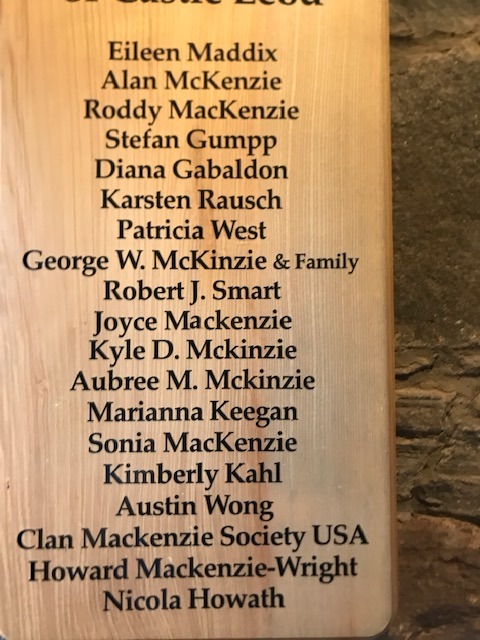
While Castle Leoch is fictional, Diana Gabaldon has expressed a strong wish to associate it with the real Castle Leod. Upon seeing a photograph of Castle Leod, she immediately linked the two in her mind and hoped filming could take place there, though practical considerations led to Doune Castle being used instead. Her support for Castle Leod has been considerable, as has that of the two leading actors in Outlander. All three are Guardians of Castle Leod.
Images of the Guardian Shields at Castle Leod provided by Cabarfeidh and castleleod.org.uk
We’re thrilled to share the latest YouTube release from historian and Initiative co-founder, Andrew McKenzie, a moving and insightful tribute to Viscount Fortrose, the last Earl of Seaforth.
Kenneth Mackenzie lived a life that defied category. Grandson of a Jacobite exile, he was restored to the peerage only to burn brightly and briefly as one of the most fascinating figures of 18th century Highland and British society.
Nicknamed “Gimcrack”, after the famous racehorse, Kenneth was short, fast, and full of flair. He raised the 78th Highlanders, entertained Mozart, climbed volcanoes with Sir William Hamilton, dined with Joseph Banks, was painted by Reynolds, and secretly wed a celebrated courtesan.
Explore this dramatic story and the legacy that echoes through Highland history and Clan Mackenzie heritage.
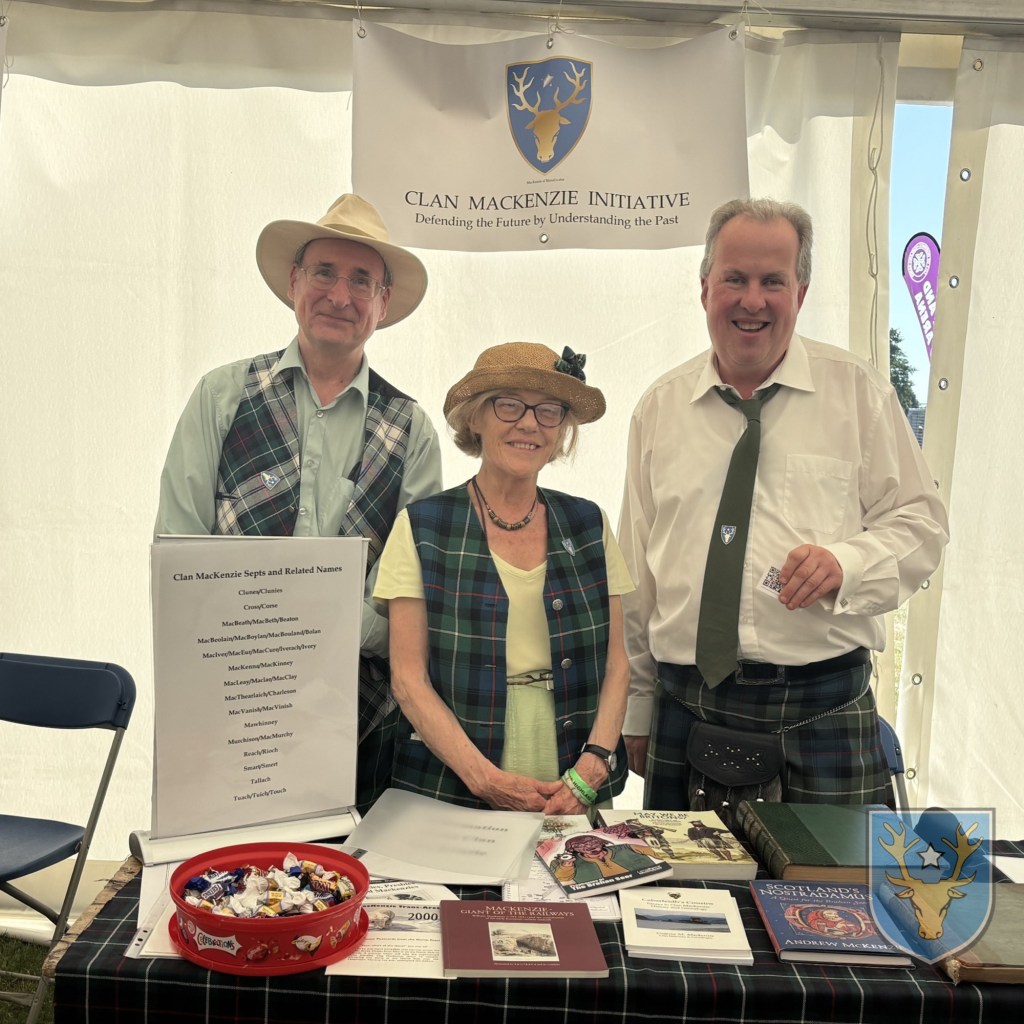
Left to right: Graeme Mackenzie (Clan Seanchaidh), Margaret Mackenzie and Colin Mackenzie
This past weekend marked a historic first for the Clan Mackenzie Initiative, our debut appearance at the Inverness Highland Games, one of Scotland’s most iconic clan gatherings. We were honored to stand among the many proud names in the Clan Tent, representing not just the legacy of Clan Mackenzie, but its living, growing future.
It was a scorcher by Highland standards, 32°C (that’s nearly 90°F), and while our American friends may consider that “pleasant,” we can confirm it had more than a few locals seeking refuge under the tent. Shade aside, the conversations were just as lively as the sunshine was strong.
We were ably represented by Margaret Saunders and Colin Mackenzie, both past officers of the Clan Mackenzie Society of Scotland and the UK and Graeme Mackenzie, past Chairman of the CMSSUK and current Seanchaidh (historian) of the Clan.
But this day wasn’t just about who was at the table, it was about why we’re here.
The Clan Mackenzie Initiative exists to ensure that our shared history is never locked behind a paywall, hidden behind closed doors, or guarded by gatekeepers. We believe in free, open access to clan heritage, where anyone, from any part of the world, can explore their Mackenzie roots without permission or dues.
This is the heart of clanmackenzie.org:
Free history
Honest research
Real community
No gatekeepers – Ever
We’re just getting started, but the response we’ve received, both online and in-person in Inverness, confirms what we already knew: this matters.
So whether you stopped by our table, listened to the podcast, shared your family’s story, or just explored the site, thank you. The Mackenzie story belongs to all of us. And with your help, it’s only going to grow.
Reach out and share your story by finding the Initiative on Facebook, Instagram or by contacting us at clanmackenzieinitiative@gmail.com
On Saturday July 12th, 2025, the Clan Mackenzie Initiative will be representing Clan Mackenzie at the Inverness Highland Games.
We’re honored to stand among the clans at one of Scotland’s most celebrated gatherings as a global community committed to keeping the Mackenzie story open, honest, and alive.
At our table in Inverness, you’ll find stories, open archives, and living history.
You’ll find the real Clan Mackenzie—free, grassroots, and global.
Since 1995 Graeme has acted as Seanachaidh for Clan MacKenzie, compiling material on Mackenzie genealogy from published sources and through research commissioned from him by individual clans people; and he served for two years as Chairman of the Clan Mackenzie Society of Scotland & the UK. In the course of his work as a professional genealogist he’s collected a considerable amount of information on other Scottish families and names, and is pursuing a particular interest in the nature of the Scottish clan, and the evolution of the so-called “clan system”. His involvement with clan gatherings has given Graeme considerable experience attracting overseas visitors to the Highlands, which led to him being invited to join Visit Scotland’s Ancestral Tourism Group.
He is the creator of clanmackenzie.net and founder of Highland Roots (highlandroots.net). Their mission “To help the descendants of Scots around the world discover their roots in the Highlands – by researching their ancestors for them, or teaching them how to do it for themselves.”
We look forward to benefiting from Graeme’s work and making it available to the Initiative.